Testing one API took eight steps. I made it three.
Porting five old demos to the cloud portal was the easy answer. I rebuilt the playground around one question: does this API deserve a place in my stack?
Problem
You could only watch the demos.
Developers could watch examples, but not try their own input or judge fit without leaving the portal.
See the old portal
- Fixed inputs, separate maps, and raw responses.
- Nothing on the page came from the developer’s own data.
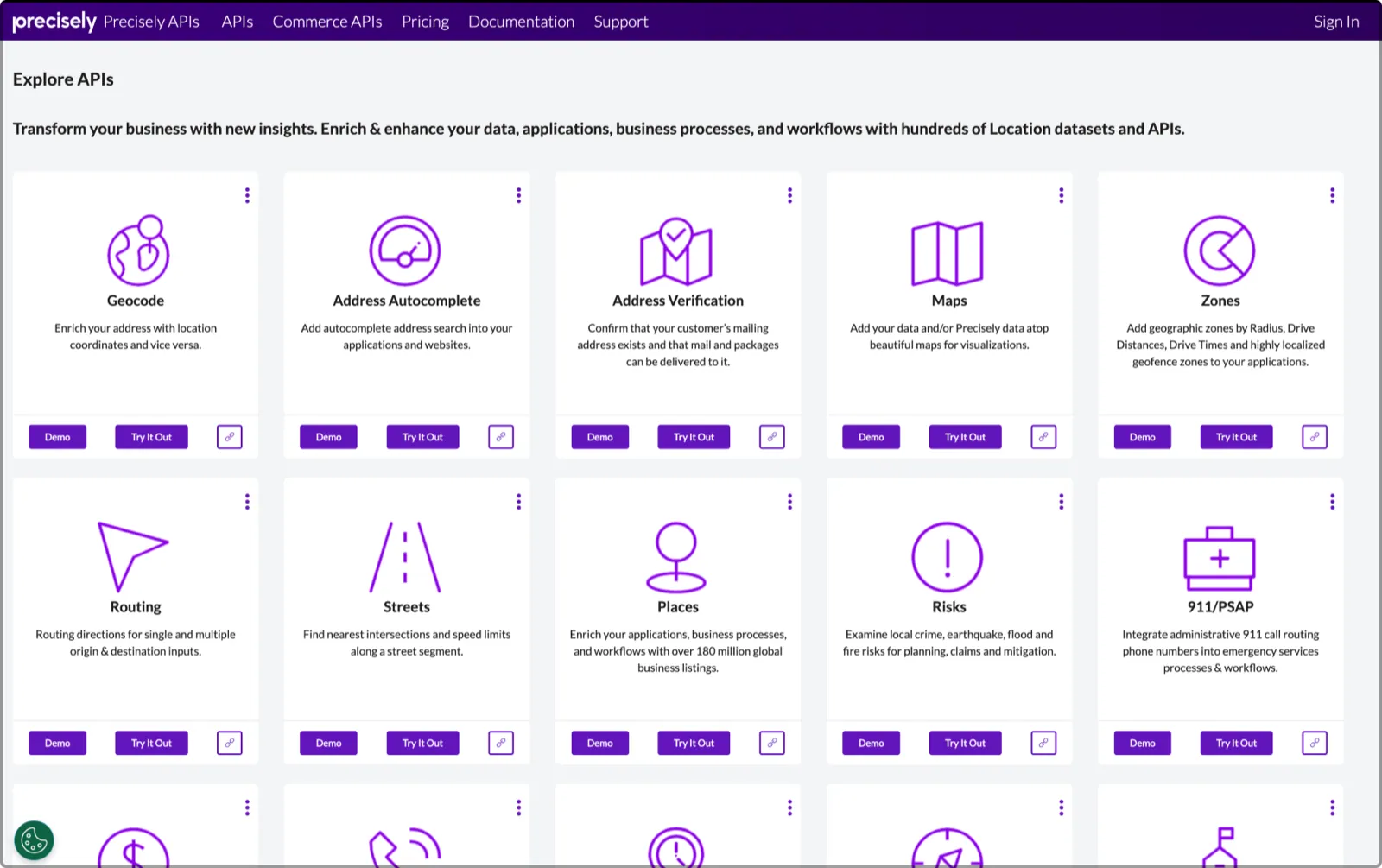
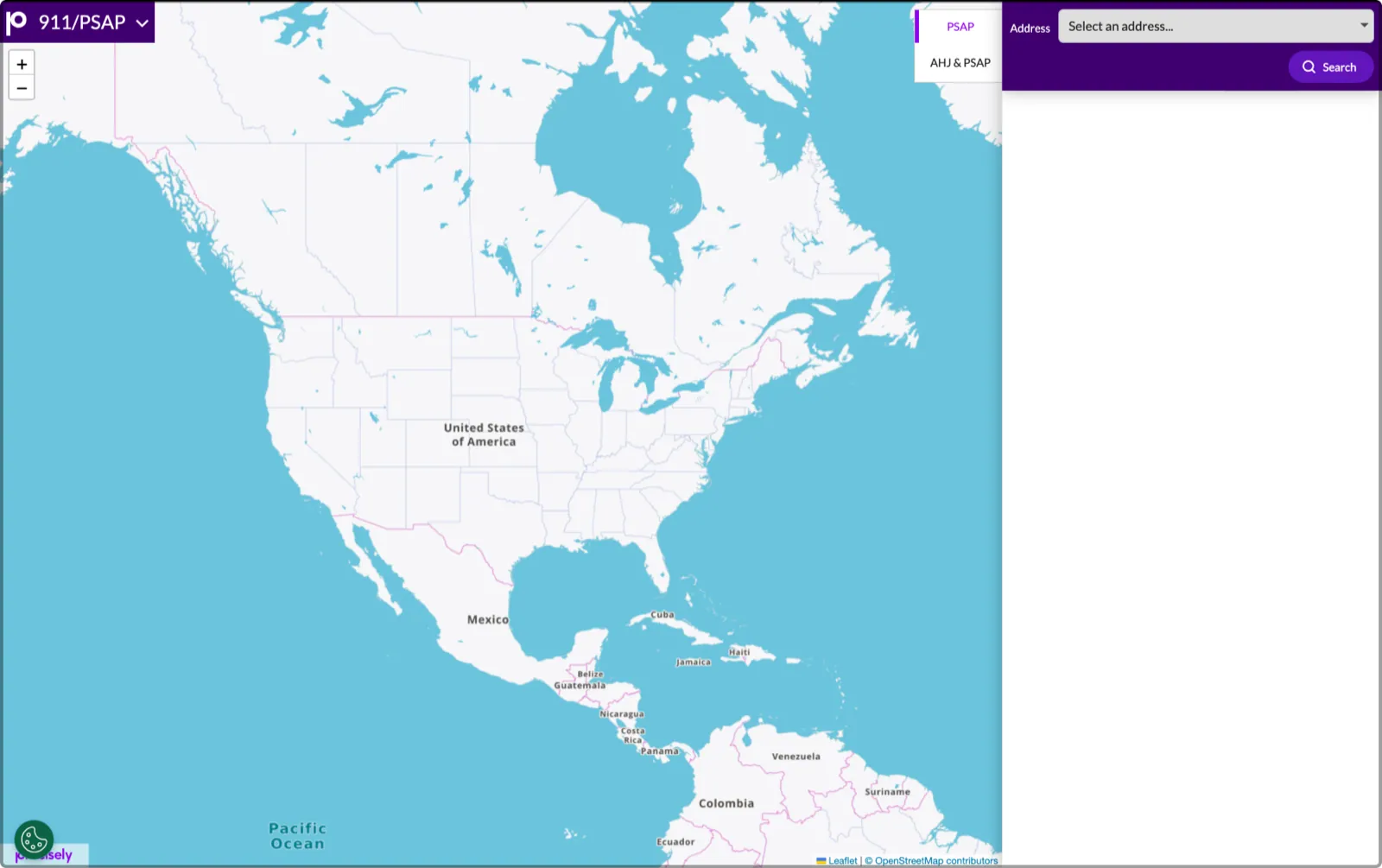
Emergency Info API, old portal.
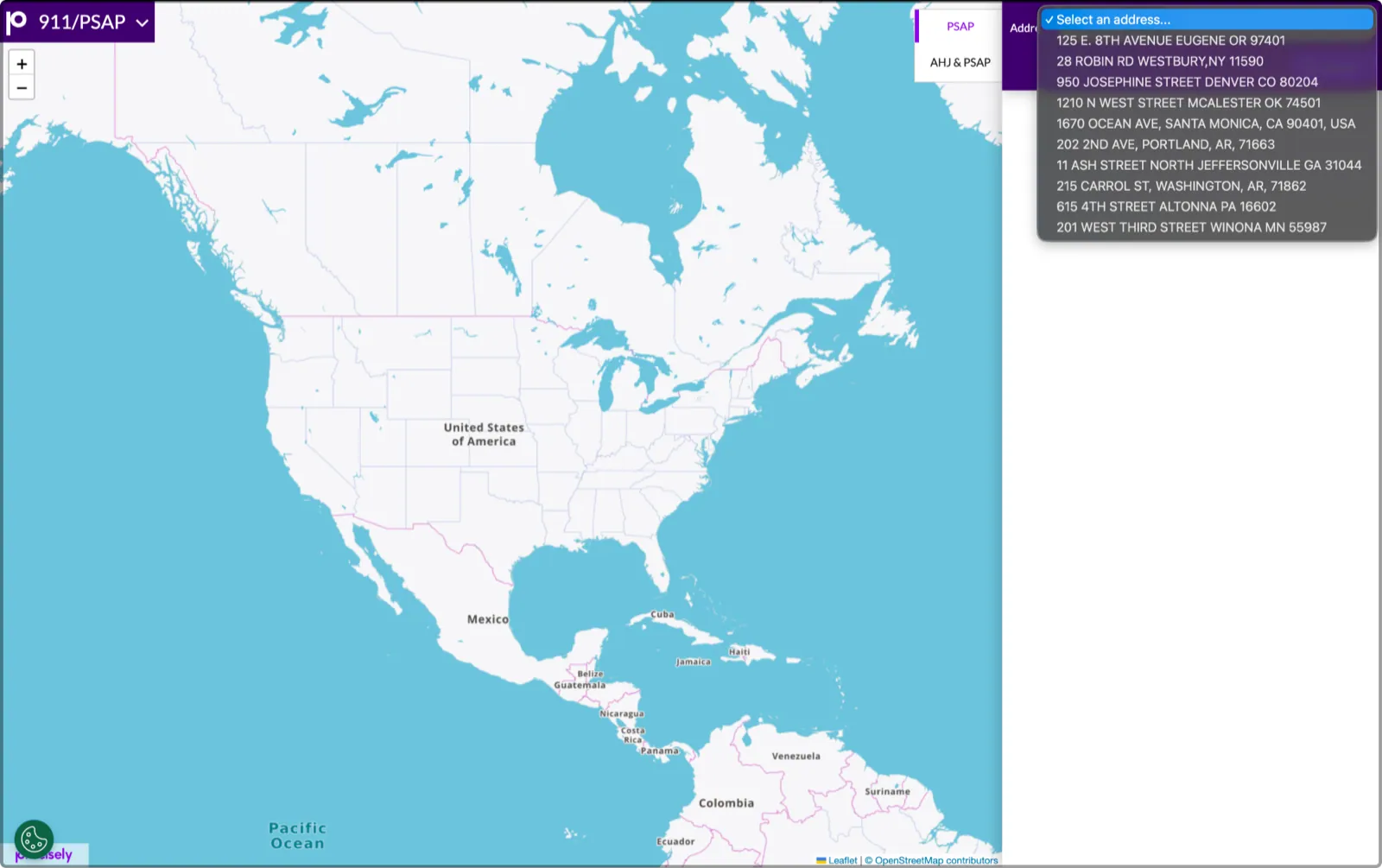
Fixed inputs, disabled fields.
What I found
Five demos. One broken evaluation.
I mapped one API test end to end. From step three on, the developer was in an external tool.
See the flow I mapped
- Every tryout sent developers back to the docs before they could judge a result.
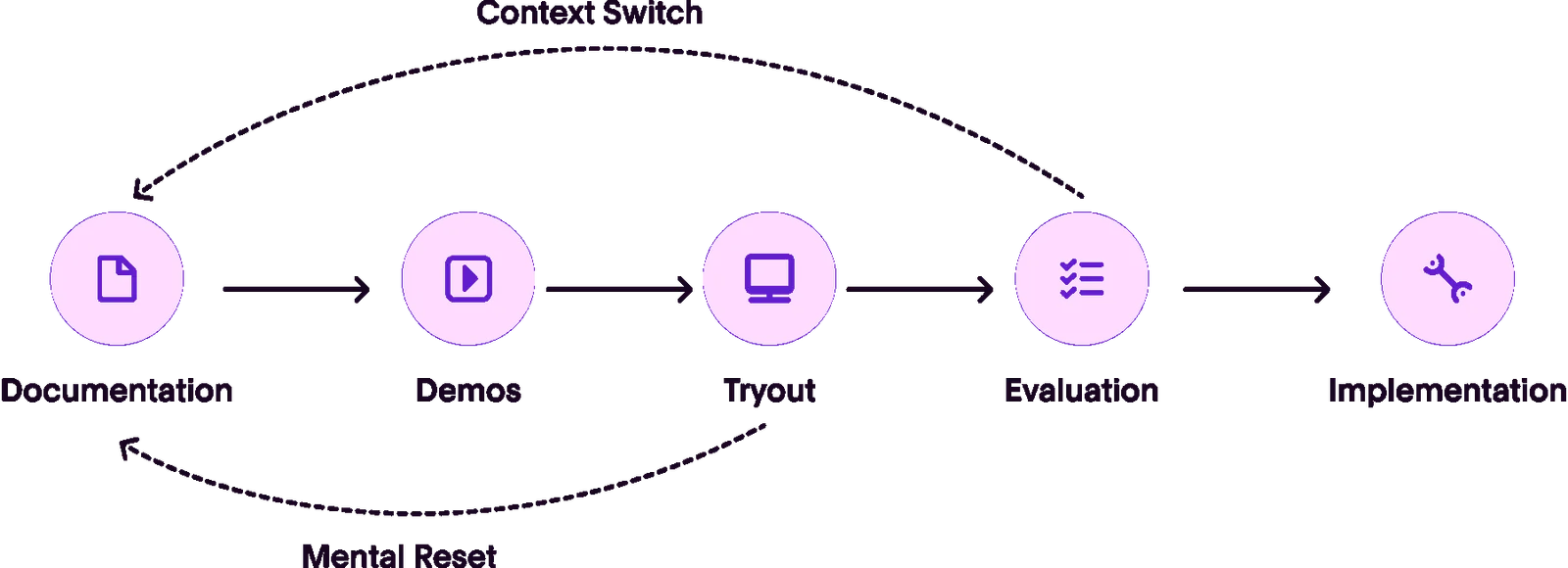
- Find docs
- Download spec
- Open tool
- Import spec
- Configure auth
- Set inputs
- Send
- Interpret
- Choose API
- Enter real input
- Read result
What I decided
Stop rebuilding the demo. Build the system.
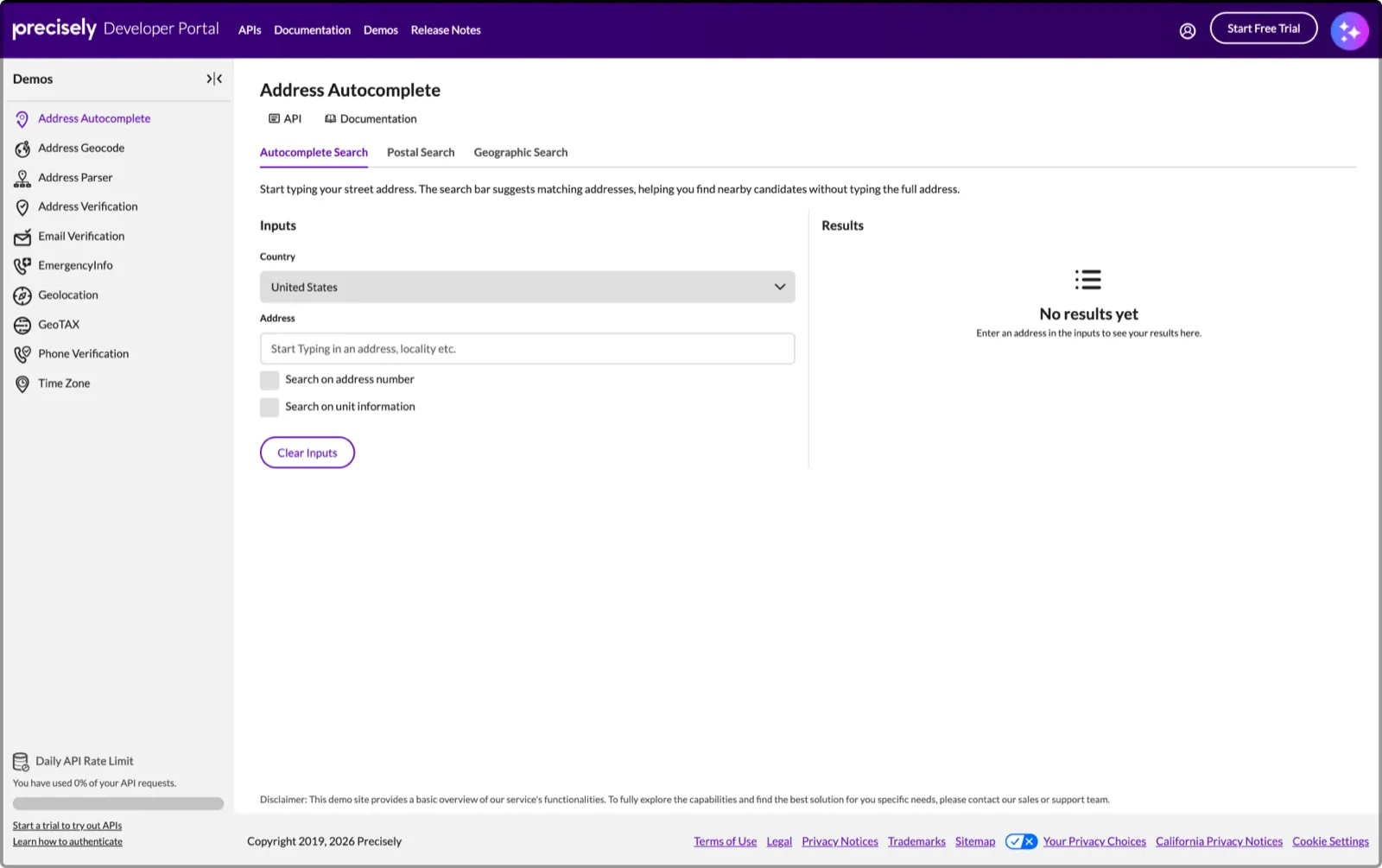
One tryout pattern that bends to each API. Developers learn it once; a new API is just a configuration.
What it cost
No API got a fully custom demo of its own.
Proof
One page logic runs all five shipped demos.
The notes behind this
- Context, inputs, map, and result stay in one workspace.
What I decided
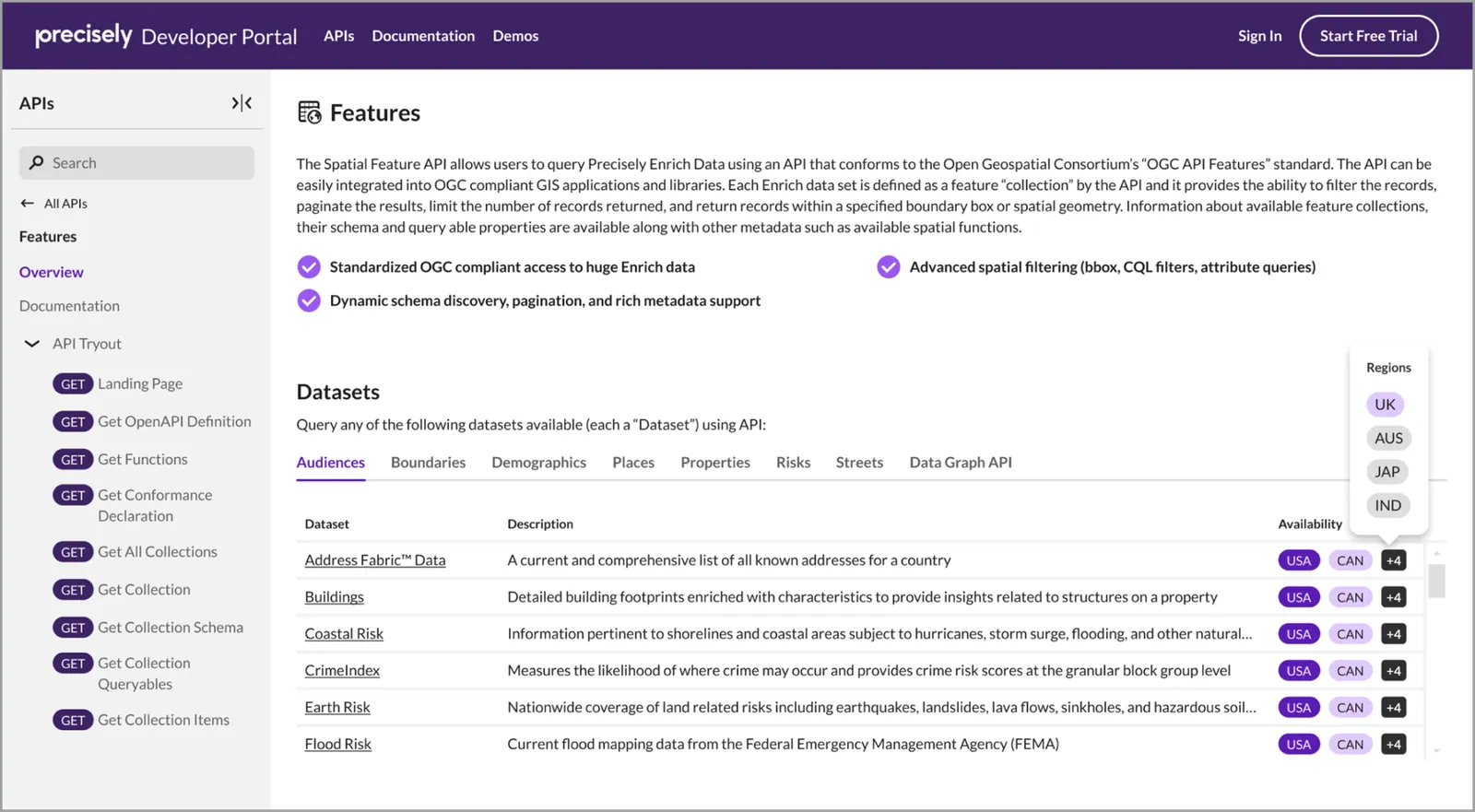
Their data, not our sample.
Developers check coverage first, then send a real request with their own coordinates or filters and see what comes back.
What it cost
Real inputs meant real edge cases showed up mid-evaluation.
Watch the simplest demo
- Categories and availability replaced a blank input box.
- I proved the shape on Reverse Geocode first: one input, one map, one result.
What I decided
One system. Five levels of complexity.
GeoTAX needed far more setup than Time Zone and Wi-Fi. One pattern had to handle both without forking.
What it cost
GeoTAX’s extra controls stay hidden until needed, so the simple demos stay simple.
Proof
GeoTAX runs in the same workspace, with no separate interaction model.
The notes behind this
- Maps and responses stay legible without changing the core flow.
What shipped
The workaround disappeared. The pattern survived.
The wider program tested it with eight product managers, developers and sales engineers, then shipped it, and new APIs reuse the pattern.
To a first API response
First-session API success
From about 60% before. Like the 10 to 3 minutes, a team estimate.
Fewer support requests
Onboarding, after API Tryout went live.
Estimated and reported by stakeholders and Solutions Engineering, not instrumented.
Looking back
Next, I measure it in the product.
Next time I’d instrument time to a first successful request instead of relying on team estimates, and tree-test the catalog names I left as they were.
Beyond the brief
Beyond the brief, I built a working prototype in Figma Make and GitHub Copilot on live APIs, so the direction was approved on real responses. I added reusable components to the Precisely Design System and, with Jerimy Brown, brought Claude and Copilot workflows into the whole design team.